How the Digital Age Reshaped Trump’s Iran Policy
The presidency of Donald Trump marked a dramatic shift in how foreign policy was conducted, particularly toward Iran. While tensions between the United States and Iran long predate his administration, the digital age fundamentally altered how those tensions were expressed, escalated, and managed. The rise of social media, cyber warfare, real-time intelligence, and digital propaganda reshaped not only policy execution but also global perception.
Trump’s Iran policy did not emerge in a vacuum. It evolved within a rapidly changing technological landscape where communication was instantaneous, narratives were contested online, and cyber capabilities became tools of statecraft. The digital age amplified both the reach and volatility of U.S. actions, making foreign policy more public, more unpredictable, and more intertwined with domestic politics.
Understanding how the digital environment influenced Trump’s decisions requires examining several interconnected dimensions: communication strategies, cyber operations, media ecosystems, and the broader geopolitical consequences of operating in a hyper-connected world.
Trump’s Iran Policy Maximum Pressure Strategy
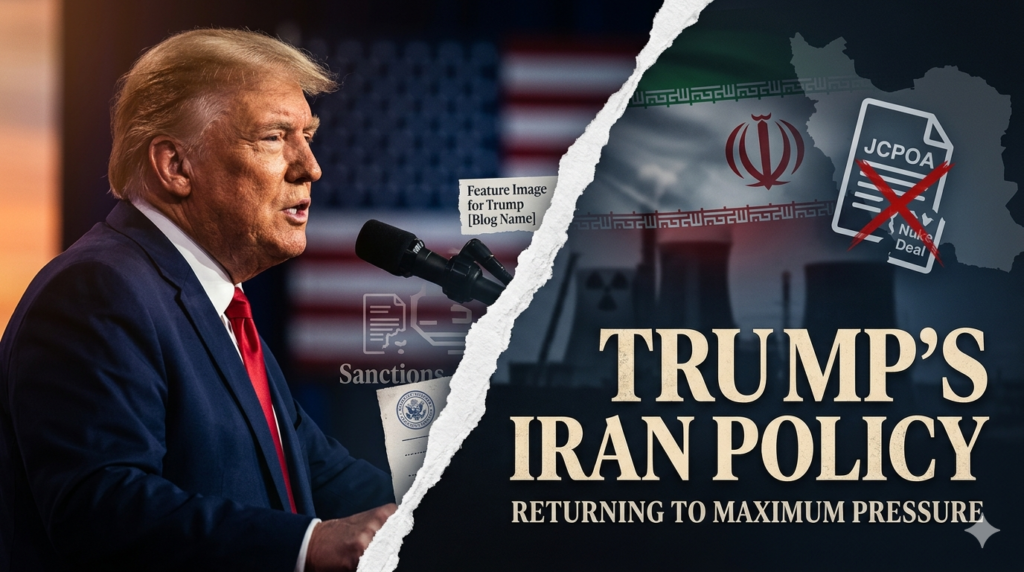
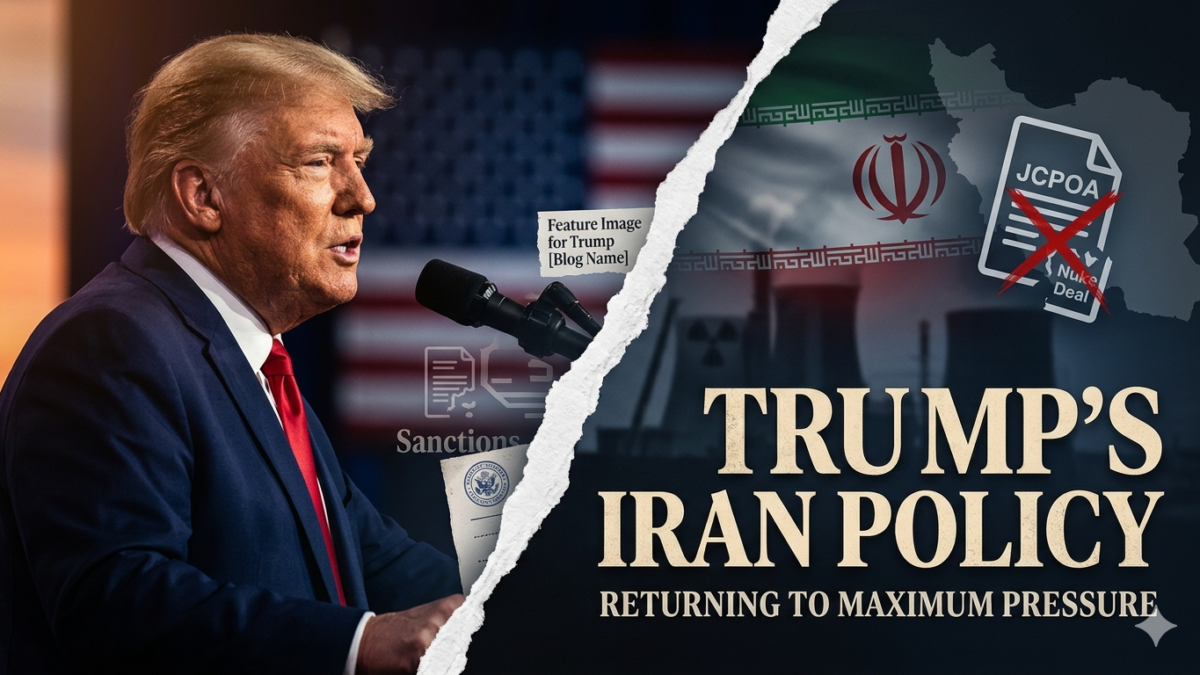
At the core of Trump’s Iran policy was the “maximum pressure” strategy, which relied heavily on economic sanctions and diplomatic isolation. After withdrawing from the Joint Comprehensive Plan of Action (JCPOA), his administration sought to cripple Iran’s economy and force renegotiation on stricter terms.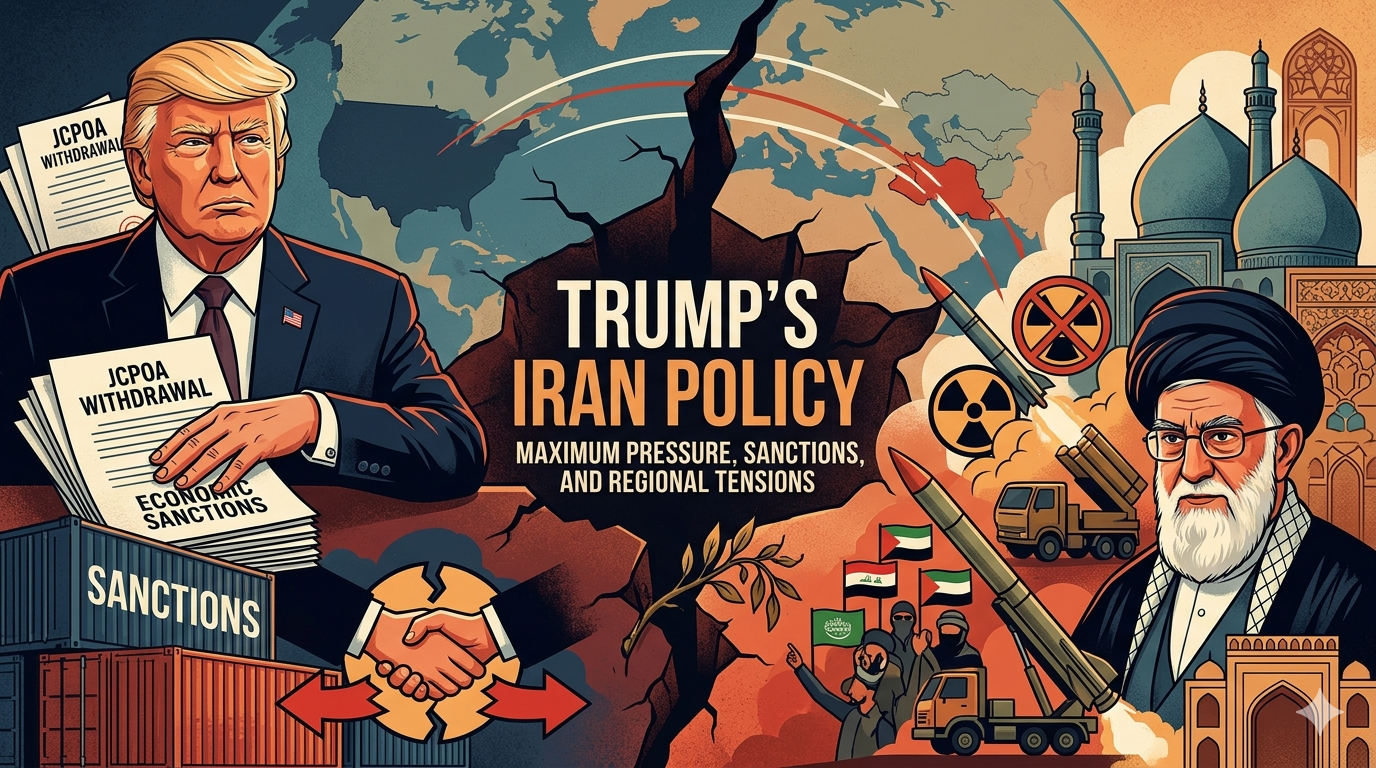
This approach emphasized unilateral action and economic coercion. Sanctions targeted Iran’s oil exports, financial institutions, and key industries, aiming to limit the regime’s capacity to fund regional proxies.
However, even this traditional Trump’s Iran policy tool was reshaped by the digital age. Sanctions enforcement increasingly depended on digital financial tracking, surveillance technologies, and global data networks. Cryptocurrency, digital banking systems, and online trade routes created new challenges in monitoring compliance and preventing evasion.
Moreover, the effectiveness of sanctions became tied to information flows. Public narratives about their impact—whether portraying success or failure—spread rapidly online, influencing international cooperation and domestic support.
Social Media Diplomacy and Direct Communication
One of the most defining features of Trump’s presidency was his use of social media as a primary diplomatic tool. Unlike previous administrations, which relied on formal statements and backchannel negotiations, Trump frequently communicated policy positions directly to the public—and to foreign leaders—via digital platforms.
This approach had several consequences. First, it accelerated the pace of diplomacy. Announcements, threats, and policy shifts could occur in real time, often without prior coordination with allies or government agencies. Second, it blurred the line between domestic political messaging and international strategy.
Trump’s rhetoric toward Iran often oscillated between threats and offers of negotiation, reflecting a highly personalized and performative style. Analysts described this as a form of “transactional diplomacy,” where communication itself became a tool of pressure.
The Trump’s Iran policy digital medium amplified these messages globally within seconds. Iranian officials, international media, and global audiences could respond instantly, creating a feedback loop that intensified tensions. In this environment, diplomacy became less about quiet negotiation and more about public signaling.
The Role of Real-Time News Cycles
The Trump’s Iran policy digital age transformed how quickly events influenced policy decisions. Continuous news coverage and real-time updates meant that developments in U.S.-Iran relations were immediately visible worldwide.
During periods of escalation, such as military confrontations or threats of strikes, the global media ecosystem played a critical role in shaping perceptions. Trump’s statements and actions were scrutinized, interpreted, and debated across digital platforms within minutes.
Recent reporting highlights how rapidly shifting narratives affected policy credibility. For instance, Trump’s abrupt reversal from threats of severe escalation to accepting a ceasefire exposed the limits of his leverage and raised questions about consistency.
This constant visibility created pressure for immediate responses, reducing the space for long-term strategic planning. Decisions were increasingly influenced by how they would be perceived in the media, rather than solely by traditional diplomatic considerations.
Cyber Warfare and Digital Conflict
Beyond communication, the digital age introduced a new battlefield: cyberspace. U.S.-Iran tensions extended into cyber operations, where both sides sought to disrupt each other’s infrastructure and capabilities.
Trump’s cyber strategy emphasized offensive capabilities, viewing cyberspace as an arena where U.S. power could be decisively applied. However, critics argued that this approach lacked sufficient focus on defense and institutional coordination.
Iranian cyber activities posed significant threats, including potential attacks on critical infrastructure and digital networks. These developments highlighted the growing importance of cyber warfare as a component of foreign policy.
The integration of cyber operations into broader military strategies blurred the line between war and peace. Unlike traditional conflicts, cyber engagements could occur continuously without formal declarations, creating a persistent state of tension.
Algorithmic Narratives and Information Warfare
The digital age also transformed how narratives about the Iran conflict were constructed and disseminated. Social media algorithms played a key role in amplifying certain viewpoints while suppressing others.
Research into online discourse shows that digital platforms can shape public perception by prioritizing emotionally charged or polarizing content. In the context of U.S.-Iran relations, this often led to the amplification of extreme positions and misinformation.
Trump’s Iran policy information warfare became a strategic tool. Both the United States and Iran engaged in efforts to influence public opinion, using digital campaigns to promote their narratives and undermine their opponents.
These dynamics complicated policymaking. Leaders had to navigate not only the realities of geopolitics but also the perceptions created by digital ecosystems. Public opinion, shaped by algorithms, could influence political decisions and constrain policy options.
The Personalization of Foreign Policy
The digital age enabled an unprecedented level of personalization in foreign policy. Trump’s approach to Iran often reflected his individual style, with decisions and statements closely tied to his public persona.
This personalization was reinforced by digital platforms, where the president’s voice could dominate the narrative. Traditional institutions, such as the State Department, played a less visible role in shaping communication.
While this approach allowed for flexibility and rapid response, it also introduced unpredictability. Policy shifts could occur अचानक, sometimes without clear strategic rationale. This unpredictability became a defining feature of Trump’s Iran policy.
Critics argued that such volatility undermined U.S. credibility. Allies and adversaries alike struggled to interpret the consistency of American commitments, particularly when policy signals changed rapidly.
Economic Warfare in a Digitalized World
Economic pressure remained a central pillar of Trump’s Iran policy, but its implementation was deeply influenced by digital technologies. Financial sanctions relied on sophisticated tracking systems, data analytics, and global communication networks.
At the same time, Iran adapted by leveraging digital tools to circumvent restrictions. Online marketplaces, alternative payment systems, and covert networks enabled continued economic activity despite sanctions.
Trump’s Iran policy the digitalization of the global economy created a complex environment where enforcement became more challenging. It also highlighted the interconnected nature of modern financial systems, where actions in one region could have ripple effects worldwide.
Military Strategy and Digital Integration
Military operations during Trump’s presidency were increasingly integrated with digital technologies. Intelligence gathering, surveillance, and targeting relied on advanced data systems and real-time information.
In conflicts involving Iran, digital tools played a critical role in coordinating operations and assessing outcomes. Satellite imagery, cyber intelligence, and data analytics enhanced the precision and speed of military actions.
However, these capabilities also introduced new risks. Information leaks, cyber vulnerabilities, and the rapid spread of images and videos could influence public perception and escalate tensions.
The Trump’s Iran policy digital environment made it more difficult to control narratives about military actions, as information could be shared widely and instantly.
Global Reactions in a Connected World
The digital age amplified international reactions to Trump’s Iran policy. Allies, adversaries, and global audiences could engage with developments in real time, shaping diplomatic dynamics.
For example, ceasefire negotiations and military actions were closely followed and analyzed worldwide. Reports indicate that international responses to U.S.-Iran developments were immediate and varied, reflecting the interconnected nature of global politics.
This environment increased the importance of perception management. U.S. actions were not only judged by their outcomes but also by how they were communicated and understood globally.
The Limits of Digital Power
While the digital age provided new tools and opportunities, it also revealed limitations. The speed and visibility of digital communication sometimes undermined strategic coherence.
Trump’s approach, characterized by dramatic rhetoric and sudden shifts, demonstrated the challenges of managing Trump’s Iran policy in a highly connected world. Critics argued that such tactics could reduce credibility and effectiveness.
Moreover, the digital environment made it harder to achieve lasting outcomes. Even significant actions, such as military strikes or sanctions, could be quickly reframed or contested online, limiting their impact.
Domestic Politics and Digital Influence
Domestic politics played a crucial role in shaping Trump’s Iran policy, and the digital age intensified this connection. Social media platforms allowed political narratives to spread rapidly, influencing public opinion and electoral dynamics.
Policy decisions were often intertwined with domestic considerations, as leaders responded to the expectations and reactions of their supporters. The digital environment made these interactions more immediate and visible.
This dynamic created a feedback loop, where Trump’s Iran policy actions influenced domestic politics, which in turn shaped future decisions. The result was a more politicized and volatile approach to international relations.
The Evolution of Crisis Management
Crisis management in the digital age differs significantly from traditional approaches. The speed of information flow requires rapid decision-making and constant communication.
During periods of heightened tension with Iran, the need to respond quickly to developments often limited the ability to engage in careful deliberation. Digital platforms amplified both the urgency and the stakes of these situations.
At the same time, the availability of real-time data provided new opportunities for monitoring and analysis. Leaders could access detailed information about events as they unfolded, enhancing situational awareness.
However, Trump’s Iran policy the challenge lay in interpreting this information accurately and avoiding overreaction to incomplete or misleading data.
The Legacy of Digital Transformation
Trump’s Iran policy illustrates how the digital age has transformed foreign policy in fundamental ways. Communication, strategy, and perception are now deeply interconnected, shaping the outcomes of international interactions.
The use of social media, cyber operations, and digital narratives created a new paradigm where policy is conducted in the public eye. This transparency can enhance accountability but also increase volatility.
As future administrations navigate similar challenges, the lessons of this period will remain relevant. The digital age is not merely a backdrop for Trump’s Iran policy but an active force that shapes its direction and impact.